
Roofing · Newcastle upon Tyne, Tyne and Wear
Slate & Tile Roofing in Newcastle
Newcastle Roofer Restoration Company has coordinated new slate roofing, concrete and clay tile roofing, slipped and broken slate replacement and dry ridge and dry verge systems since Paul and Steve founded the firm in 2008 — eighteen years of covering Tyneside's pitched roofs in whatever material each street actually calls for, from a Grainger Town Georgian terrace to a 1930s Gosforth semi.
A pitched covering is more than a colour choice. The free roof survey weighs natural Welsh slate against fibre-cement slate, and concrete interlocking tile against clay plain tile, against the pitch, the budget and, where it applies, what a conservation area will actually permit. A dry ridge and dry verge system finishes every new covering as standard, mechanically clipping the ridge and verge units down rather than trusting a mortar bed that the wind off the Tyne will eventually crack loose.
Every covering is laid to BS 5534, the standard governing mechanical fixing against wind uplift, with a section typically re-covered in one to three days and the whole job priced in a fixed written quote before a single tile or slate is ordered.
When Newcastle homeowners choose slate or tile roofing with us, they're choosing a covering fixed to hold through the next North Sea gale, not just to look right on the day it goes on. Call 07460 067785 for a free survey and find out what your roof actually needs.
What We Do
Slate, Tile and the Systems That Fix Them Down
Which covering is right depends on the roof, the street and the budget — natural slate, fibre-cement slate, clay tile or concrete tile — and every one is fitted with the mechanical fixings and dry-fix ridge and verge system BS 5534 now requires.
New Slate Roofing — Natural & Fibre-Cement
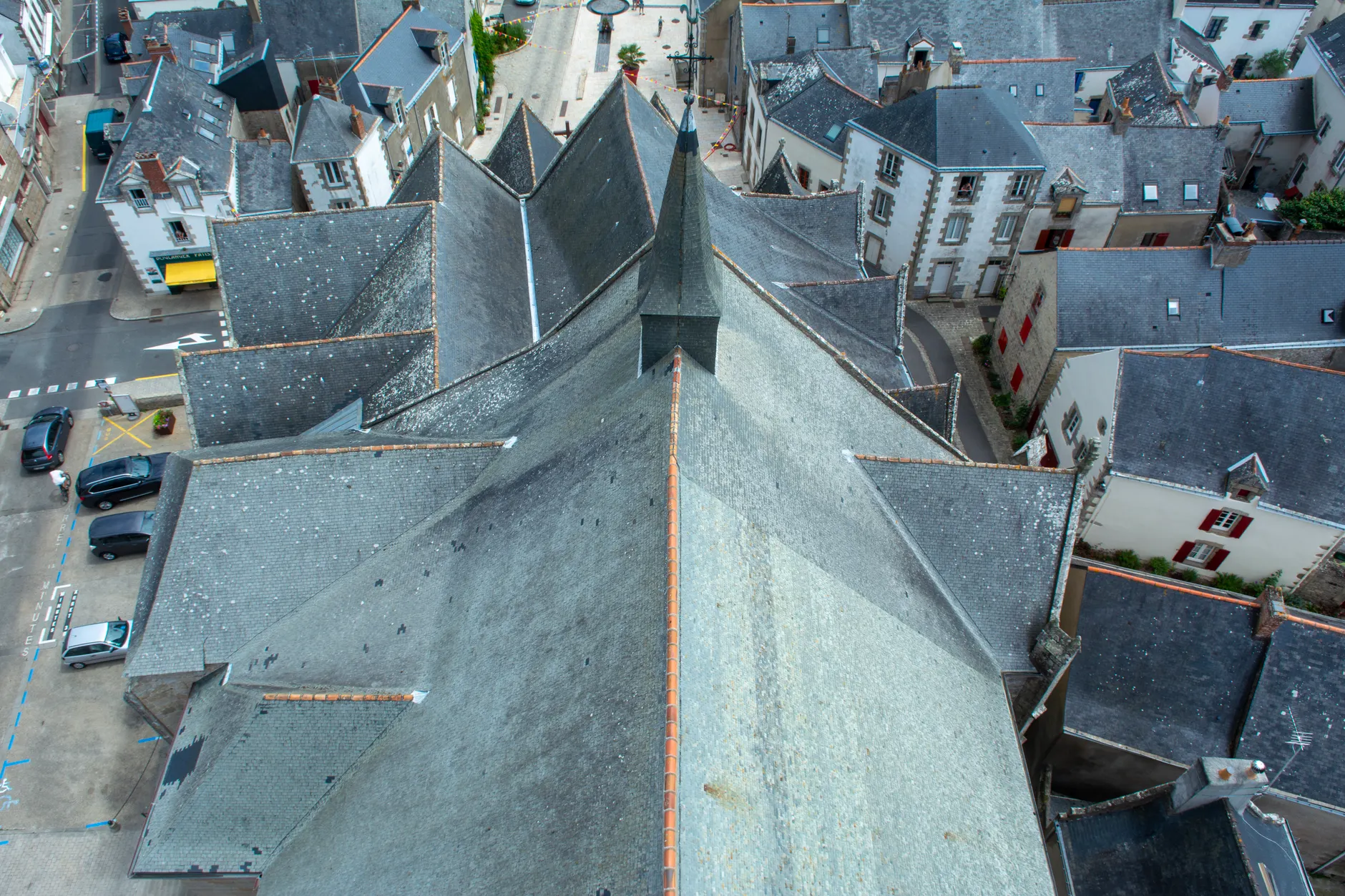
Natural Welsh slate remains the default on Newcastle's Victorian terraces and inside conservation areas such as Grainger Town and Gosforth, where a housing stock the council rates as unmatched anywhere else in the city means the covering has to be matched like-for-like. Where the roof and budget don't call for natural slate — an extension, a Wallsend semi, a non-listed re-cover — fibre-cement slate gives the same profile and colour range at a lower weight and cost, laid to the same BS 5534 mechanical-fixing spec so both perform identically against wind uplift off the Tyne.

Concrete & Clay Tile Roofing
Clay plain tiles and concrete interlocking tiles cover most of Newcastle's interwar and postwar stock, from the hipped 1930s semis around Gosforth to the estates spreading out towards Wallsend, and the choice between them is largely weight, cost and colour rather than performance. Concrete interlocking tile is the more common re-cover on an unrestricted roof — lighter to source, a wider colour range, lower material cost per square metre — while clay plain tile keeps a period Edwardian or Victorian profile where the street calls for it, both fixed with the nail and clip pattern BS 5534 sets for the pitch and exposure.
Dry Ridge & Dry Verge Systems
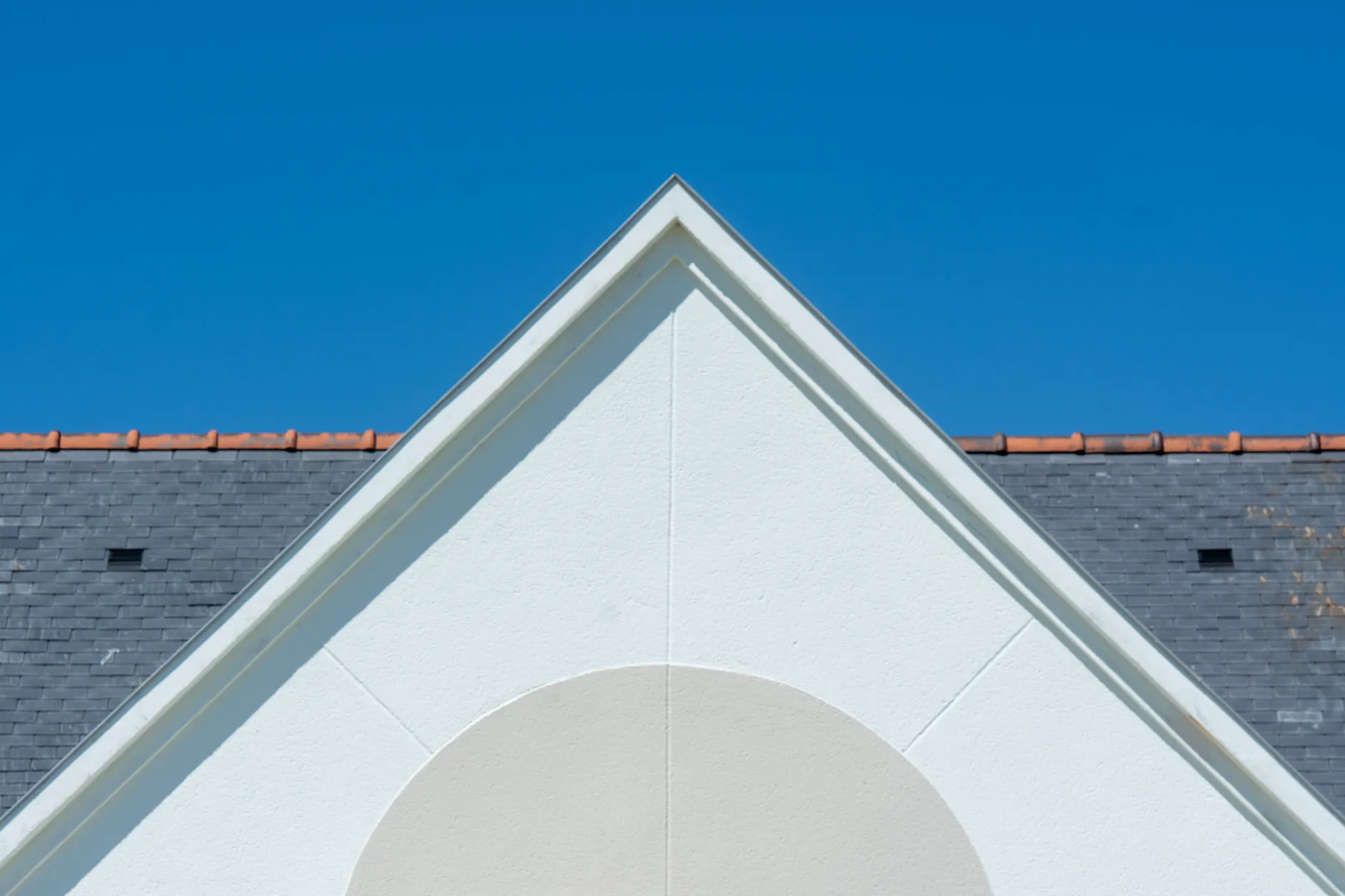
A mortar-bedded ridge or verge is the first thing a strong northerly lifts, which is why every new slate or tile roof we cover gets a dry ridge and dry verge system — interlocking, mechanically fixed units that clip to the roof structure instead of sitting on a bed that cracks and washes out in Newcastle's freeze-thaw winters. It's a straightforward job on its own too, swapping a failing mortar ridge for a dry-fix system on an otherwise sound roof, and it's the detail on a new covering most likely to still be doing its job in decades to come.
The Benefits
Why the Fixing Detail Decides How Long It Lasts
The covering material gets the attention, but it's the fixing — mechanical nails, clips and dry-fix ridge and verge — that actually decides whether a Newcastle roof survives its first proper North Sea gale.
Wind Uplift Resistance Built In
Every slate and tile is mechanically fixed to BS 5534, and every ridge and verge is dry-fixed rather than mortar-bedded, because Wallsend and the Tyne-mouth suburbs sit more openly exposed to North Sea wind than the inland city — exactly where a mortar-only ridge lets go first. Building to the current wind-uplift standard, rather than the mortar-and-hope approach of a century-old roof, is the single biggest durability gain a new covering delivers.
A Covering That Matches the Street
In Grainger Town, the Gosforth Conservation Area and Jesmond's three conservation areas, a new slate or tile covering has to read as part of the original roof, not a visible patch, so matching size, colour and lay pattern is as much a part of the job as the fixing itself. Getting that match right protects the value of a period house sitting among some 244 listed neighbours in the city centre alone.
One Fixed Price, Whatever the Covering
Natural slate, fibre-cement, clay and concrete tile all price differently by the square metre, so the free survey sets out the real cost of each option in writing before anything is ordered — never a figure guessed down the phone. That means the decision between a heritage-matched natural slate and a lower-cost fibre-cement alternative is yours to make with real numbers in front of you.
Why Us
Why Newcastle Trusts Us With Slate & Tile Roofing
Eighteen years of fitting the right covering to the right Newcastle street, since Paul and Steve started in 2008.
We Know What Each Conservation Area Allows
Grainger Town, the Gosforth Conservation Area and Jesmond's Brandling Village, South Jesmond and Jesmond Dene areas each carry their own rules on matching materials, and we've fitted slate and tile inside all of them. That means a conservation constraint gets flagged at survey stage, before a covering is chosen, rather than after the wrong tile turns up on site.
We Fix for Newcastle's Wind, Not Just the Brochure Spec
Wallsend and the suburbs nearest the Tyne mouth catch North Sea wind more directly than the inner city, and we fix every ridge, verge, slate and tile to BS 5534 with that exposure in mind, not the bare minimum. A covering fitted for a sheltered inland roof and one fitted for Wallsend's open aspect are not the same job.
Coordinated Cover Across the Whole Area
From the Georgian core of Grainger Town out to Gosforth, Jesmond and Wallsend, the roofers we coordinate fit slate and tile coverings across the full service area — see our full range of roofing services, or roof replacement and re-roofing where the whole roof needs stripping back first.
A new slate or tile covering also brings the chimney into view — see chimney and leadwork for repointing and lead flashing renewal, and guttering, fascias and soffits for the roofline underneath it. Where the existing covering just needs the moss cleared rather than replacing, see roof cleaning and moss removal, and our full services for everything else we cover across Gosforth, Jesmond and Wallsend.
Frequently Asked Questions
What's the difference between natural slate and fibre-cement slate?
Natural slate and fibre-cement slate look almost identical once they're on the roof, but they're different materials with different costs. Natural Welsh slate is the traditional Newcastle covering and the only acceptable choice inside conservation areas like Grainger Town and the Gosforth Conservation Area, where existing slate roofs must be matched like-for-like. Fibre-cement slate is a manufactured alternative in the same profile, colour range and pitch tolerance, at a lower weight and lower cost per square metre, and it suits an unrestricted roof, an extension or a non-listed re-cover where matching an existing natural slate isn't a requirement. Both are fixed to the same BS 5534 mechanical-fixing standard, so neither performs worse against wind uplift off the Tyne — the choice comes down to budget, weight and whether the property sits in a controlled area.
Is concrete or clay tile better for a Newcastle roof?
Concrete interlocking tile and clay plain tile both cover a great deal of Newcastle's interwar and postwar stock, from the hipped 1930s semis around Gosforth to newer estates further out towards Wallsend, and neither is objectively better — they suit different roofs. Concrete tile is lighter to source, comes in a wider range of colours and typically costs less per square metre, which makes it the common choice for an unrestricted re-cover. Clay plain tile keeps the smaller-unit, more textured look of an original Victorian or Edwardian roof, and it's usually the right call where the street or the existing roofline calls for that period profile. Both are laid with the fixing pattern BS 5534 sets for the roof's pitch and exposure, so the decision is really about look and budget, not durability.
What is a dry ridge and dry verge system, and do I need one?
A dry ridge or dry verge system replaces the traditional mortar bed at the ridge and verge with interlocking, mechanically fixed units that clip the ridge tiles or verge tiles down to the roof structure. Mortar-bedded ridges and verges are one of the first things a strong northerly lifts, because the mortar cracks, shrinks and eventually lets go, and Newcastle's exposure by the Tyne mouth makes that a real risk, especially in Wallsend and the near-coastal suburbs. Every new slate or tile covering we fit finishes with a dry-fix system as standard, and it's also a straightforward job on its own, swapping a failing mortar ridge for a mechanical one on an otherwise sound roof.
How much does slate or tile roofing cost per square metre in Newcastle?
A full slate or tile re-cover typically runs £120 to £275 per square metre in Newcastle, supplied and fitted, with natural slate and matched conservation work at the top of that range and concrete tile on an unrestricted roof usually nearer the bottom. A smaller job — replacing a section of slipped or broken slate, or upgrading a mortar ridge to a dry-fix system — is priced more like a repair, typically £150 to £500, depending on access and how much of the covering is affected. The free survey measures the actual roof area, checks the pitch and access, and sets both figures out in a fixed written quote before anything is ordered, so there's no guessing on the phone.
Can I fit natural slate on a Grainger Town or Gosforth conservation property?
Yes, but the material isn't a free choice inside a conservation area. Grainger Town's Tyneside Classical core holds around 244 listed buildings, 29 of them Grade I, and the Gosforth Conservation Area — designated in April 2002 to protect a High Victorian, Queen Anne Revival and Edwardian housing stock the council rates as unmatched anywhere else in the city — both require any re-covered roof to be finished in matching natural slate rather than fibre-cement or concrete tile. Jesmond carries the same requirement across its Brandling Village, South Jesmond and Jesmond Dene conservation areas. We confirm a property's conservation status at survey, before any covering is ordered, so the specification is right from the outset.
How long does a slate or tile roofing job take?
A straightforward slate or tile repair — replacing a slipped section or upgrading a ridge to dry-fix — usually takes one to three hours on an accessible roof. A full re-cover of one roof section runs one to three days, and a complete house re-roof in slate or tile is typically five to ten working days once scaffold is up, per the scope agreed at survey. Weather is the real variable on this coast: rain and high winds stop covering work outright, so a programme built around a run of settled days is more reliable than a fixed calendar date. The written quote gives a realistic timeframe for your specific roof once the survey has measured it.
Why does every tile and slate now need mechanical fixing instead of mortar?
Every tile and slate we fit is mechanically fixed to BS 5534 rather than relied on mortar, because Wallsend and the suburbs closest to the Tyne mouth sit more openly exposed to North Sea wind than the inner city, and a mortar-only fixing is exactly what a strong gust lifts first. The standard sets a minimum number of fixings per tile or slate depending on pitch, exposure and position on the roof, with perimeter and ridge units needing more than field tiles. Fitting to that standard on a new slate or tile covering, rather than the bare minimum a cheaper job might use, is the difference between a roof that survives its first proper northerly and one that doesn't.
Does a Wallsend property need Newcastle City Council or North Tyneside Council for a re-cover?
Wallsend sits in the Metropolitan Borough of North Tyneside, not the City of Newcastle upon Tyne, so any building control notification or conservation-area question for a Wallsend property runs through North Tyneside Council rather than Newcastle's planning department — an easy detail to get wrong if a quote assumes the wrong authority. Switching a roof from slate to tile, or the other way round, is generally your choice on an unrestricted Wallsend roof, since North Tyneside's conservation designations sit elsewhere in the borough rather than over Wallsend's terraced stock. We confirm the correct authority and any local requirement at survey, so the quote and any notification are handled against the right council from the start.
Can you replace just a few slipped or broken slates without redoing the whole roof?
Yes — where only a handful of slates or tiles have slipped or cracked on an otherwise sound covering, we replace just that section rather than recommending a full re-cover. The harder part on an older natural-slate roof is matching the replacement to slate that's weathered for decades, so we source slate as close as possible in size, thickness and colour and place it where the difference is least visible, often mixing salvaged sound slate back in alongside it. On a concrete or clay tile roof, matching is more straightforward since manufactured tile ranges are more consistent, though older discontinued profiles can need a genuine search for a matching product. Either way, it's fixed to the same BS 5534 standard as new work.
How long does a slate or tile roof actually last?
As general trade guidance rather than a guaranteed figure, natural slate is widely regarded as the longest-lived UK roof covering, commonly outlasting several generations of fixings when it's properly maintained, while fibre-cement slate and concrete or clay tile also run for many decades under normal Newcastle weather. What actually ends a covering's life on this coast is usually the fixing, not the material itself — nail corrosion or a mortar ridge failing long before the slate or tile wears out, which is exactly why we fix to BS 5534 and finish with dry ridge and dry verge systems rather than mortar. A properly fixed covering, on a well-maintained roof, is a long-term investment rather than a recurring cost.