Roofing · Newcastle upon Tyne, Tyne and Wear
Roof Replacement & Re-Roofing in Newcastle upon Tyne
There comes a point on Newcastle's older roofs where refixing individual slates stops making sense, and it usually arrives the same way: the slates keep slipping, no matter how many are put back, because the nails holding all of them have rusted to the point of failure. This is nail sickness, and on the city's vast stock of Victorian and Edwardian Welsh-slate terraces and Tyneside flats — built out hard from the 1870s to 1914 — it is the single most common reason a roof reaches the end of its life. Once a roof is nail-sick throughout, the honest answer is a full strip and re-cover, not another round of patching.
Newcastle Roofer Restoration Company has coordinated slate re-roofing, tile re-roofing, full strip and re-cover and new roof installation since we started in 2008 — eighteen years of taking tired Tyneside roofs back to the rafters and re-covering them to a standard that will outlast the last one. Every re-roof begins with a free roof survey and a fixed written quote setting out the whole scope, and the work is carried out to BS 5534 for slating and tiling, with new breathable underlay and battens, dry-fixed ridges and verges, and lead renewed to BS EN 12588 — plus the insulation upgrade Building Regulations Part L requires where it applies.
A re-roof is also the moment the roof is brought up to a standard the original never met. Since BS 5534 was revised in 2014 and took effect in 2015, reliance on mortar alone to resist wind uplift was withdrawn — every single-lap tile must now be mechanically fixed and perimeter tiles need at least two fixings — which is why modern ridge and verge details are dry-fixed rather than bedded in mortar that cracks and washes out on Newcastle's exposure. A century-old roof was never built to that standard, so a strip and re-cover is a genuine upgrade against the wind and frost that stripped ridges and slates off Tyneside during Storm Arwen.
If a roof is losing slates faster than they can be replaced, sagging along the ridge, or letting water in across several points at once, it is worth a proper survey to weigh repair against replacement honestly. Call 07460 067785 for a free survey, and we will tell you straight whether the roof has years left in it or whether the sensible spend is a full re-cover done once, properly.
What We Do
From Nail-Sick Slate to a Roof That Outlasts the Last
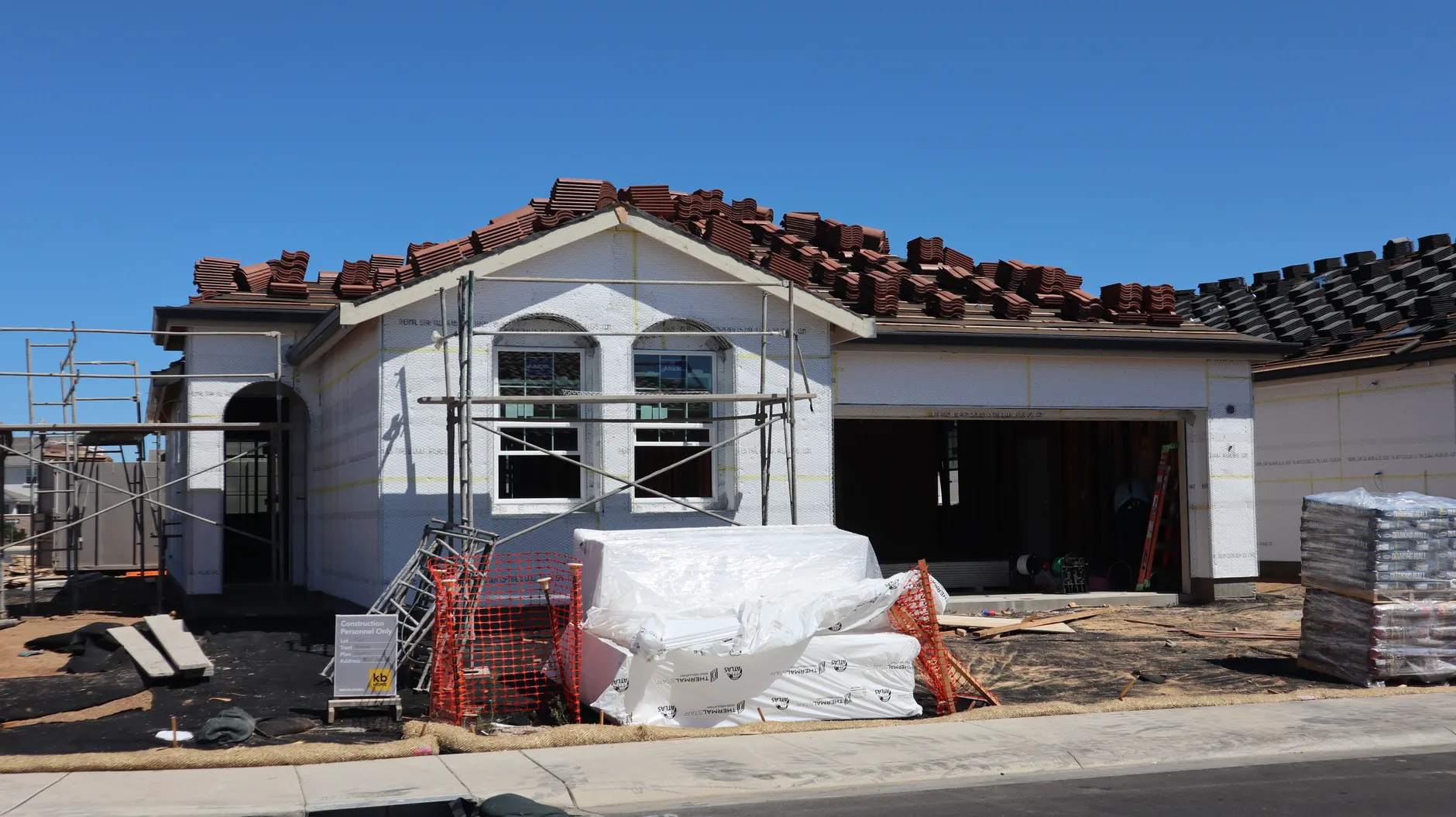
Whether the roof is natural slate, clay or concrete tile, a re-cover is a full strip back to the rafters, new underlay and battens, and a covering fixed to today's wind-uplift standard.
Slate Re-Roofing & Conservation Matching
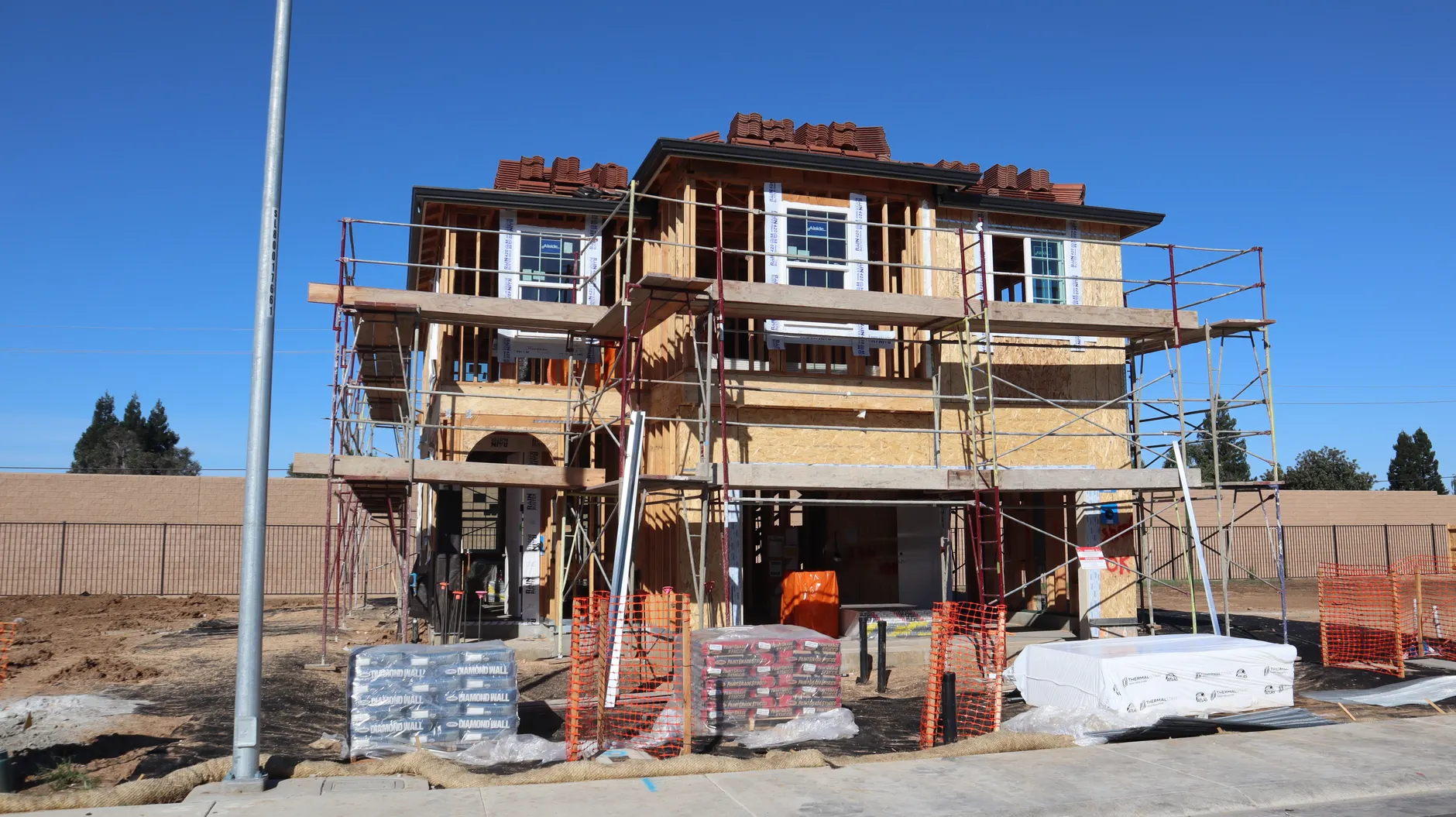
A nail-sick natural-slate roof on a Jesmond or Gosforth terrace is stripped back to the rafters, checked for rotten timber, then re-covered in natural slate on new breathable underlay and battens, refixed to BS 5534 so it holds against wind uplift rather than tired nails. In the conservation areas that cover much of Jesmond and parts of Gosforth, the re-cover must be in matching natural slate rather than a switch to concrete tile. Where sound original slates can be salvaged, they are re-laid alongside matched new slate — both for the conservation requirement and for the look of a roof sitting among its listed and period neighbours.

Tile Re-Roofing
The interwar and postwar semis of Gosforth, Wallsend and the outer suburbs — with their hipped clay-tile and later concrete-tile roofs — reach the point where tiles slip, battens fail and ridge mortar perishes, and a re-tile brings the whole roof back in one job. The old covering comes off, the timbers are checked, new breathable underlay and treated battens go on, and the roof is re-tiled with dry-fixed ridge, hip and verge to BS 5534. Switching to dry-fix is a real durability gain on Newcastle's exposure, because the mortar-bedded ridges and verges of an older roof are exactly what the wind lifts first — and a re-tile is the chance to upgrade roof-space ventilation and insulation while the covering is off.

Full Strip, Re-Cover & New Roof Installation
A full strip and re-cover takes the roof right back to the rafters, so everything the covering hides — underlay, battens, and any timber that has rotted under a long-standing leak — is inspected and put right before the new roof goes on. On a Tyneside flat, where one roof covers two households, that matters because the whole shared structure is dealt with in a single properly scoped job. New-build and extension roofs are installed to the same standard from the deck up — structure, underlay, battens, covering, flashings and rainwater goods as one system — and whether it is a full re-cover of a century-old terrace or a new roof on an extension, the scope is fixed in writing first.
The Benefits
Why a Re-Roof Is Done Once, Properly
A strip and re-cover is a significant spend, so it is scoped honestly and built to outlast the roof it replaces.
Repair-vs-Replace, Judged Honestly
Not every tired roof needs replacing, and we will say so where a well-targeted repair genuinely has years left in it. But where a roof is nail-sick throughout and losing slates faster than they can be put back, we are equally straight that repeated patching is money spent twice. The free survey lays out both routes with real costs, so the decision is yours.
Built to Today's Wind-Uplift Standard
A re-cover is fixed to BS 5534, with every slate and tile mechanically fixed and ridges, hips and verges dry-fixed rather than bedded in mortar that cracks and washes out — a genuine upgrade over a century-old roof against Newcastle's coastal wind, and exactly what a strong northerly like Storm Arwen tests.
The Whole Roof Put Right at Once
Stripping back to the rafters means the underlay, battens, ventilation, insulation and any hidden rotten timber are all dealt with in one job, rather than left buried under a fresh covering to cause trouble later — so the finished roof is drier, warmer and sound throughout, not just newly slated on the surface.
Why Us
Why Newcastle Calls Us for Re-Roofing
Eighteen years of taking nail-sick Tyneside roofs back to the rafters and re-covering them to last, since we started in 2008.
We Match Slate in Conservation Streets
A re-cover in a Jesmond or Gosforth conservation area must be in matching natural slate rather than a switch to concrete tile, and we source and salvage slate that matches the original roof in size and colour. That means a re-roofed period house sits among its listed neighbours as part of the street, and meets the requirement that external changes in a controlled area use matching materials.
We Re-Roof the Tyneside Flat as One
A Tyneside flat's single roof covers two households, so a piecemeal re-cover over one front door while the other side stays nail-sick simply moves the problem along. We scope the whole shared roof as one job, stripped, checked and re-covered together — the only approach that actually solves a two-door roof rather than deferring half of it to another winter.
Coordinated Cover Across the Whole Area
From the Welsh-slate terraces of Heaton and Sandyford out to Gosforth, Jesmond and Wallsend, the roofers we coordinate handle slate and tile re-roofing across the full service area — see our full range of roofing services, and roof repairs where a targeted fix is still the right call.
A re-roof is the point to put everything right at once — see chimney and leadwork for stack and lead renewal that often runs alongside a re-cover, and guttering, fascias and soffits for the roofline while the scaffold is up. Where a targeted fix is still the right call, see roof repairs, and our full services for everything else. The same cover reaches Gosforth, Jesmond and Wallsend.
Frequently Asked Questions
How do I know when a roof needs replacing rather than repairing?
The clearest sign is nail sickness — slates that keep slipping no matter how many are refixed, because the nails holding the whole roof have rusted to failure at roughly the same rate. Other signs are a ridge line that is sagging, water coming in at several points at once, and repairs that no longer hold through a winter. A free survey establishes honestly whether the roof is nail-sick throughout, or whether targeted repairs still have real life left in them.
What is nail sickness and why does it end a slate roof's life?
Nail sickness is the rusting-through of the iron or steel nails that fix each slate to the batten, and because all the nails on an old roof are the same age and corrode at the same rate, they begin to fail across the whole roof at once. Once that stage is reached, refixing individual slipped slates becomes a losing battle, because the next nail along lets go as soon as you have dealt with the last. A full strip and re-cover with fresh copper or stainless fixings is what actually resolves it, rather than repeated patching.
My roof is in a Jesmond conservation area — can I re-roof it?
Yes, but in a conservation area the re-cover must be in matching natural slate rather than modern concrete tile, and any external change may need conservation consent, so the material and detailing have to match the original. We source slate that matches in size and colour and, where possible, salvage sound original slates to blend into the street. We flag your street's conservation status at survey so the re-roof is specified correctly from the outset.
Why does a new roof have to be mechanically fixed now?
Since BS 5534 was revised in 2014 and came into force in 2015, reliance on mortar bedding alone to resist wind uplift was withdrawn: all single-lap tiles must be mechanically fixed and perimeter tiles need at least two fixings, which is why modern ridge and verge details are dry-fixed. On Newcastle's coastal wind exposure a mortar-only ridge or verge is exactly what a strong gust lifts first. A re-cover fixed to the current standard is a genuine upgrade over the century-old roof it replaces, built to stay put in a storm.
Can you re-use my existing slates?
Where the original slates are still sound — many natural Welsh slates outlast the nails holding them by decades — we salvage the good ones and re-lay them alongside matched new slate, valuable in a conservation street. Slates that are cracked, delaminating or too worn are replaced with a matching product. The survey gives a realistic view of how many of your slates are re-usable, so the quote reflects the actual mix of salvaged and new material.
How long does a full re-roof take?
A typical UK house re-roof in slate or tile is usually a five-to-ten working day job on the roof itself, depending on size, pitch, complexity and the timber repair the strip reveals, plus scaffold time booked separately. Weather is a real factor on this coast, since rain and high winds stop covering work, so we build a sensible allowance into the programme. The survey gives you a realistic duration for your roof, and the fixed written quote sets out the full scope.
Do I need scaffolding for a re-roof?
Yes — a full strip and re-cover requires proper scaffold access and edge protection for safe working at height, usually booked and priced separately ahead of the roof work. Working at height is the serious end of roofing: falls from height remain the single most common cause of workplace fatal injury in Great Britain, and roof work is involved in almost one in five construction deaths, so the access is not a corner to cut. The quote sets out the scaffold requirement clearly.
Will a re-roof need building regulations approval?
A re-cover that replaces a significant proportion of the roof can trigger Building Regulations, particularly Part L, which requires the insulation to be brought up to current standards. Where that applies we build the thermal upgrade into the specification so the finished roof meets the requirement, and note that central Newcastle, Gosforth and Jesmond come under Newcastle City Council while Wallsend comes under North Tyneside Council. We flag which regulations apply to your job at survey, so the scope and quote account for it.
Should I upgrade insulation and ventilation while the roof is off?
It is well worth it, because a full strip is the one time the roof is open enough to improve the roof-space ventilation and insulation properly, without disturbing a finished roof later. Better ventilation reduces loft condensation, and improved insulation meets the current Part L expectation while making the house warmer and cheaper to heat. We set out the options at survey so you can decide whether to fold a thermal and ventilation upgrade into the re-roof while the covering is off.
Can you switch my roof from slate to tile or the other way?
On an unrestricted roof, yes — a re-cover is the natural point to change covering, though the structure has to suit the new material's weight, since slate, clay tile and concrete tile differ in load. In a conservation area, however, the material is not a free choice: the re-cover generally has to match the original, so a listed or controlled slate roof stays slate. We assess the structure and any conservation constraints at survey and advise on what your roof can be re-covered in before anything is committed.
Is a re-roof cheaper than years of repeated repairs?
Once a roof is nail-sick throughout, repeated patch repairs tend to add up to more than a single properly scoped re-cover, because each round of refixing only holds until the next tired nail lets go, and the call-outs and scaffold costs mount. A re-roof done once, properly, resets the whole covering, underlay, battens and fixings for decades. That said, we never push a re-roof on a roof that still has real repair life in it — the free survey lays out the honest cost of both routes.
Weigh Repair Against a Re-Roof
Free survey and a fixed written quote. Call 07460 067785 now.
07460 067785