Roofing · Newcastle upon Tyne, Tyne and Wear
Chimney & Leadwork in Newcastle upon Tyne
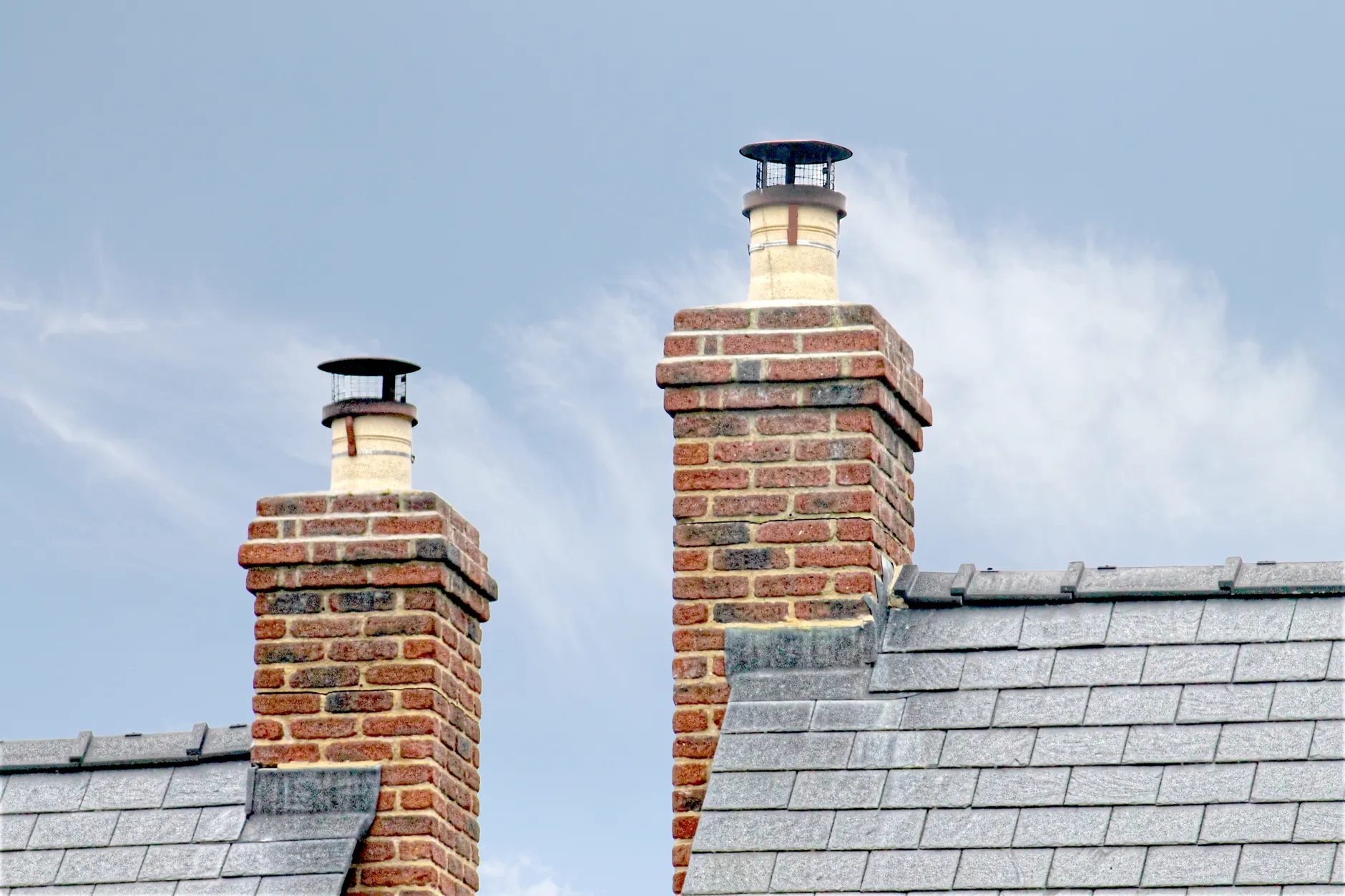
On Newcastle's period terraces, the chimney stack and the lead around it are where more roofs leak than anywhere else. The city's dense Victorian and Edwardian terraces and Tyneside flats were built with shared chimney stacks — a single stack often straddles the party wall and serves the fireplaces of two adjoining houses — and lead-lined valleys running between the paired pitches. Those lead soakers, flashings and valleys are the classic North East failure points, exposed to North Sea wind and driving rain and cycled through hard frost every winter until the mortar erodes and the lead splits, lifts or corrodes and lets water track down inside the stack.
Newcastle Roofer Restoration Company has coordinated chimney repointing, lead flashing replacement, lead valleys and soakers and chimney repair and rebuilding since we started in 2008 — eighteen years of renewing the lead and mortar on Tyneside's shared stacks and paired-terrace valleys. Every job is set out in a free roof survey and a fixed written quote, and the leadwork is carried out in rolled lead sheet to BS EN 12588 — cut, dressed and lapped to the correct code and bay sizes so it moves with the weather rather than fatiguing and splitting, following Lead Sheet Training Academy practice.
The reason chimney leaks are so often misread is that water entering at a failed flashing or a cracked mortar fillet runs down inside the stack and into the roof before it shows, so the damp appears in a bedroom or on a chimney breast well away from the actual fault. On a shared stack the same failed lead can leak into both houses at once, so the stack is surveyed as a whole rather than by chasing the single wet patch.
If damp is showing on a chimney breast, staining is spreading near a stack, or the mortar and lead look tired, it is worth a proper survey before water gets into the structure. Call 07460 067785, and we will set out honestly whether the stack needs repointing and re-leading or whether it has reached the point of a rebuild.
What We Do
Where a Chimney Actually Leaks
Most chimney leaks trace to perished flashing, eroded pointing, a split valley, or tired brickwork — so the whole stack is surveyed before any lead is dressed.
Lead Flashings, Soakers & Back Gutters
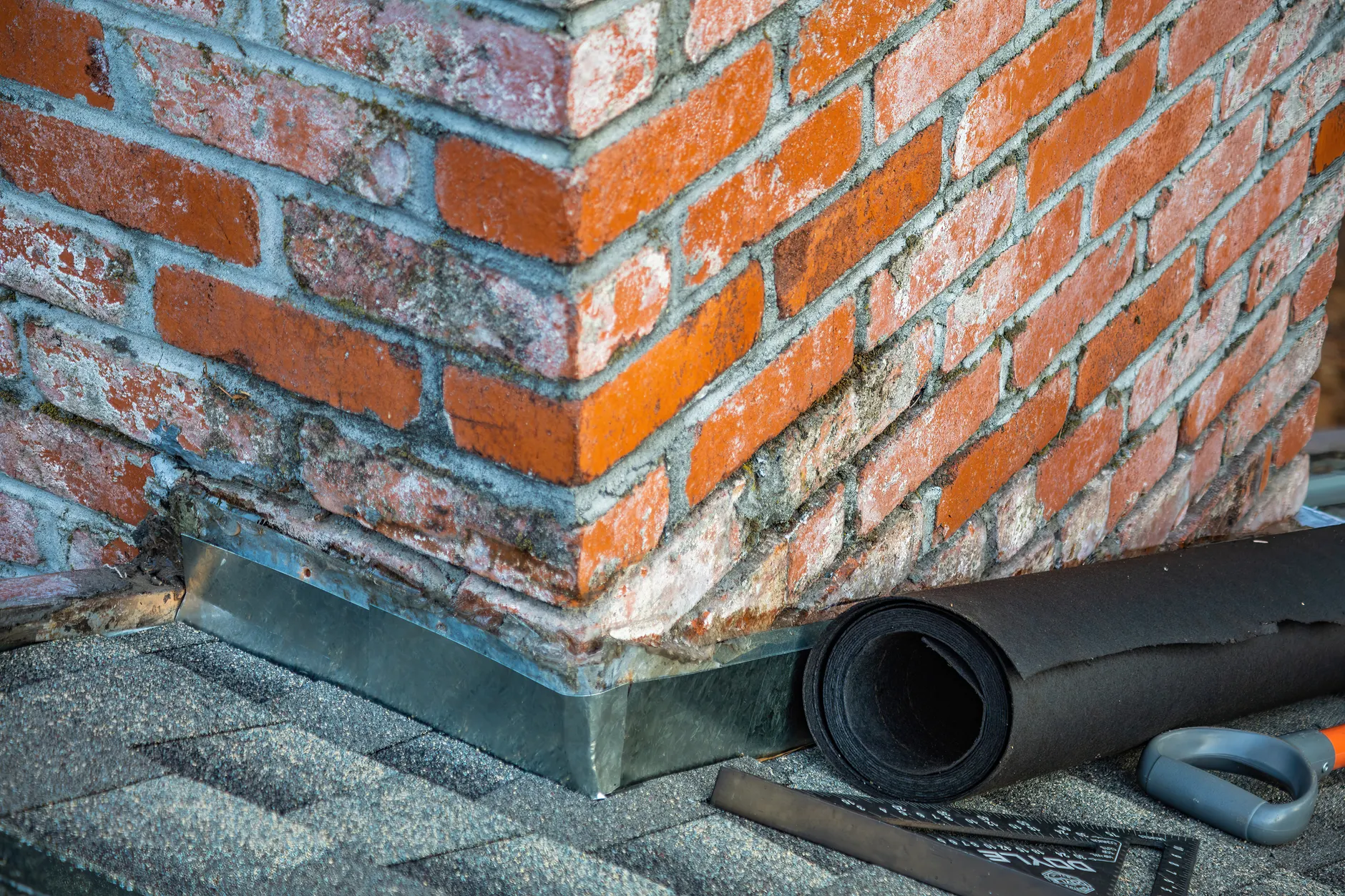
The lead that weathers the joint between a chimney and the slate — stepped flashings up the sides, soakers interleaved with the slates, an apron across the front and a back gutter behind — is where a stack most often lets water in once the lead has fatigued, lifted from its chase, or simply corroded with age. Each is renewed in rolled lead sheet to BS EN 12588, cut and dressed to the correct code and lapped in the right bay lengths so it expands and contracts with temperature rather than cracking along a fold — and on a shared terrace stack straddling the party wall the whole set of lead is renewed together, since tired flashing there leaks into both houses at once.

Lead Valleys on Paired Terraces
Where two terrace pitches meet — very common on Newcastle's paired Tyneside flats and terraces — a lead-lined valley carries the combined rainwater of both roofs down to the gutter, and it is one of the hardest-worked pieces of lead on the whole roof. Over decades the lead fatigues at the folds, thins, or splits where it has been laid in over-long lengths, and once a valley leaks it drops water straight into the roof between two households. A failed valley is stripped and re-laid in correctly sized lead bays to BS EN 12588, with proper laps, tilt fillets and underlay beneath, so it drains the two pitches cleanly — and because a valley sits at the wettest point of the roof, getting the lead code and bay lengths right is what determines whether it lasts.
Repointing, Repair & Rebuilding
Above the flashing, the stack's own brickwork takes the full exposure, and eroded mortar joints, cracked rendering and a spalling or leaning stack are common on Newcastle's older terraces where a century of frost has worked the pointing loose. Repointing rakes out the perished mortar and repoints the stack in a suitable mix, while a cracked or leaning stack that has gone beyond pointing is taken down to a sound course and rebuilt to match, or, where a stack is redundant, taken down below the roof line and the roof weathered over. Whichever route is right, the flashing and lead are renewed at the same time, so the stack is left weathertight as a whole rather than rebuilt onto tired lead.
The Benefits
Why Lead Beats Mastic on a Chimney
A chimney junction moves with heat, cold and wind, so a rigid patch cracks — proper lead is the only repair that lasts on Newcastle's exposure.
Lead Renewed, Not Smeared Over
A failed flashing or valley is renewed in rolled lead to BS EN 12588 and chased into raked-out joints, not smeared over with mastic or flashing tape that cracks again within a season or two. Dressed to the correct code, it moves with the weather instead of fatiguing, so a proper re-lead lasts decades.
The Whole Stack Weathered at Once
A stack is surveyed and repaired as a whole — flashing, back gutter, valley, mortar joints, brickwork and pot — because renewing the lead while leaving eroded pointing above it, or repointing while leaving tired flashing below, just moves the leak, and on a shared terrace stack that matters even more.
Damp Traced to Its Real Source
Water entering at a stack runs down inside it and shows up as damp on a chimney breast or bedroom wall well away from the fault, so a chimney leak is diagnosed on the roof rather than assumed from the stain — the repair then fixes the actual failed flashing, fillet or valley, not the wet patch it happened to reach.
Why Us
Why Newcastle Calls Us for Chimneys & Leadwork
Eighteen years of renewing lead and mortar on the city's shared stacks and paired-terrace valleys, since we started in 2008.
We Understand the Shared Terrace Stack
A chimney straddling the party wall serves two houses and, when its lead fails, leaks into both, so a stack is surveyed and re-leaded as a whole rather than patched on one owner's side — resolving the leak for both dwellings, not just fixing one flashing and leaving the neighbour's damp to reappear.
We Work Lead to the Standard
Flashings, soakers, aprons, back gutters and valleys are renewed in rolled lead sheet to BS EN 12588, cut to the correct code and lapped in proper bay lengths so the lead moves with the weather rather than splitting at a fold — what determines whether a chimney repair lasts decades or fails at the next hard frost.
Coordinated Cover Across the Whole Area
From the shared stacks of Heaton and Byker out to Gosforth, Jesmond and Wallsend, the roofers we coordinate handle chimney repair and leadwork across the full service area — see our full range of roofing services, and roof repairs where a slipped slate near the stack is part of the same job.
A chimney leak often travels with the slate around it — see roof repairs for slipped slates near the stack, and roof replacement and re-roofing where the whole roof is being re-covered and the lead renewed alongside it. Water off a stack or valley ends up in the guttering, fascias and soffits below, and our full services cover everything else. The same cover reaches Gosforth, Jesmond and Wallsend.
Frequently Asked Questions
Why does damp on my chimney breast mean a roof problem?
Water that gets in at a failed flashing, an eroded fillet or a cracked stack runs down inside the chimney before it shows, so it appears as damp on a chimney breast or nearby bedroom wall rather than at the point of entry. On an unused chimney with no fire drying it out, that dampness lingers and spreads. Tracing the leak on the roof to the real failed component is the only way to fix it properly.
What is lead flashing and why does it fail?
Lead flashing is the set of rolled lead pieces that weather the joint between a chimney or wall and the roof covering — stepped flashings, soakers, aprons and back gutters — sealing a junction that would otherwise let water straight in. It fails through age and fatigue: decades of expanding and contracting with temperature work the lead until it splits at a fold, lifts from its mortar chase, or corrodes, and old under-code or over-long lead fatigues faster. Renewing it in correctly sized lead to BS EN 12588 gives a junction that moves with the weather and lasts.
Can't you just seal the chimney with mastic or flashing tape?
A smear of mastic or a strip of flashing tape over a failed junction is a very short-lived fix, because the joint between a stack and the roof moves constantly with heat, cold and wind. Proper repair means renewing the lead, dressed to the correct code and chased into raked-out joints so it flexes with the weather. It costs more than a tube of sealant, but it is the difference between a repair that lasts decades and one that reappears at the next hard frost.
My stack is shared with next door — how does that affect the repair?
Many Newcastle terrace stacks straddle the party wall and serve both houses, so when the lead or pointing fails it can leak into both dwellings at once, and a repair on only one side leaves the shared fault half-fixed. We survey and re-leadwork the whole stack as one structure so the leak is resolved for both properties, and it is worth speaking to your neighbour early since a shared stack often benefits from a single scope of work. The survey sets out the whole-stack picture so the repair is scoped to solve it.
What is a lead valley and why does it leak on a terrace?
A lead valley is the lead-lined channel where two roof pitches meet, and on Newcastle's paired Tyneside flats and terraces it carries the rainwater of both roofs down to the gutter — one of the hardest-worked pieces of lead on the whole roof. Over decades it fatigues at the folds, thins, or splits where it was laid in over-long lengths, and once it goes it drops water straight into the roof between two households. Re-laying it in correctly sized lead bays to BS EN 12588 restores a clean, lasting valley.
How much does chimney repointing or lead flashing cost?
As general UK guidance rather than a quote, chimney repointing commonly runs from a few hundred to around a thousand pounds and lead flashing replacement per chimney a couple of hundred to several hundred, but the real figure depends on the stack's height, access, scaffold, and how much lead and pointing is involved. We never price a chimney blind, because access and the extent of the work vary so much between a single-storey abutment and a tall shared terrace stack. The free survey gives you a fixed written quote for your chimney.
Does my chimney need repointing or a full rebuild?
Repointing suits a stack whose brickwork is sound but whose mortar joints have eroded, which is common where a century of frost has worked the pointing loose, and it rakes out and renews the joints without disturbing the bricks. A rebuild is needed where the stack is cracked, spalling badly, or leaning — signs that it has gone beyond what repointing can fix — in which case it is taken down to a sound course and rebuilt to match. The survey establishes which stage your stack is at, and whether a redundant stack might come down instead.
Can you take down a chimney we no longer use?
Yes — where a stack is redundant and giving trouble, taking it down below the roof line and weathering the roof over the opening is often a sensible long-term answer that removes a maintenance liability for good. It has to be done properly, tying in new structure and covering so the roof is left sound, and any party-wall considerations on a shared stack need thinking through first. We set out removal as an option at survey, alongside the repair-and-keep route, so you can weigh both.
How long does chimney and leadwork take?
Lead flashing replacement on an accessible stack is often a half-day to a day, repointing a stack typically one to two days, and a stack rebuild two to four days depending on height, access and scaffold, which is booked separately. Weather affects lead and mortar work, so we plan around the forecast on this coast. The survey gives a realistic duration for your chimney, and the fixed written quote sets out the scope before the work starts.
Will you renew the lead if I'm having the roof re-covered?
Yes, and a re-roof is the ideal moment to do it, because the scaffold is already up and the covering is off, so renewing the stack flashings, valleys and soakers alongside the re-cover means the whole roof is left weathertight as one properly finished job. Re-covering a roof while leaving tired lead around the stack just moves the next leak along, so we renew the leadwork as part of a re-roof. See our roof replacement and re-roofing page for how the two jobs run together.
Is the leadwork done to a recognised standard?
Yes — flashings, soakers, aprons, back gutters and valleys are cut, dressed and lapped in rolled lead sheet to BS EN 12588, using the correct lead code and proper bay lengths so the lead can expand and contract without fatiguing, following Lead Sheet Training Academy practice. Working lead to the standard rather than over-long or under-code is what determines whether it lasts decades or fails early. We are happy to explain what the standard covers for your job before anything is booked.