Roofing · Newcastle upon Tyne, Tyne and Wear
Flat Roof Repair & Replacement in Newcastle upon Tyne
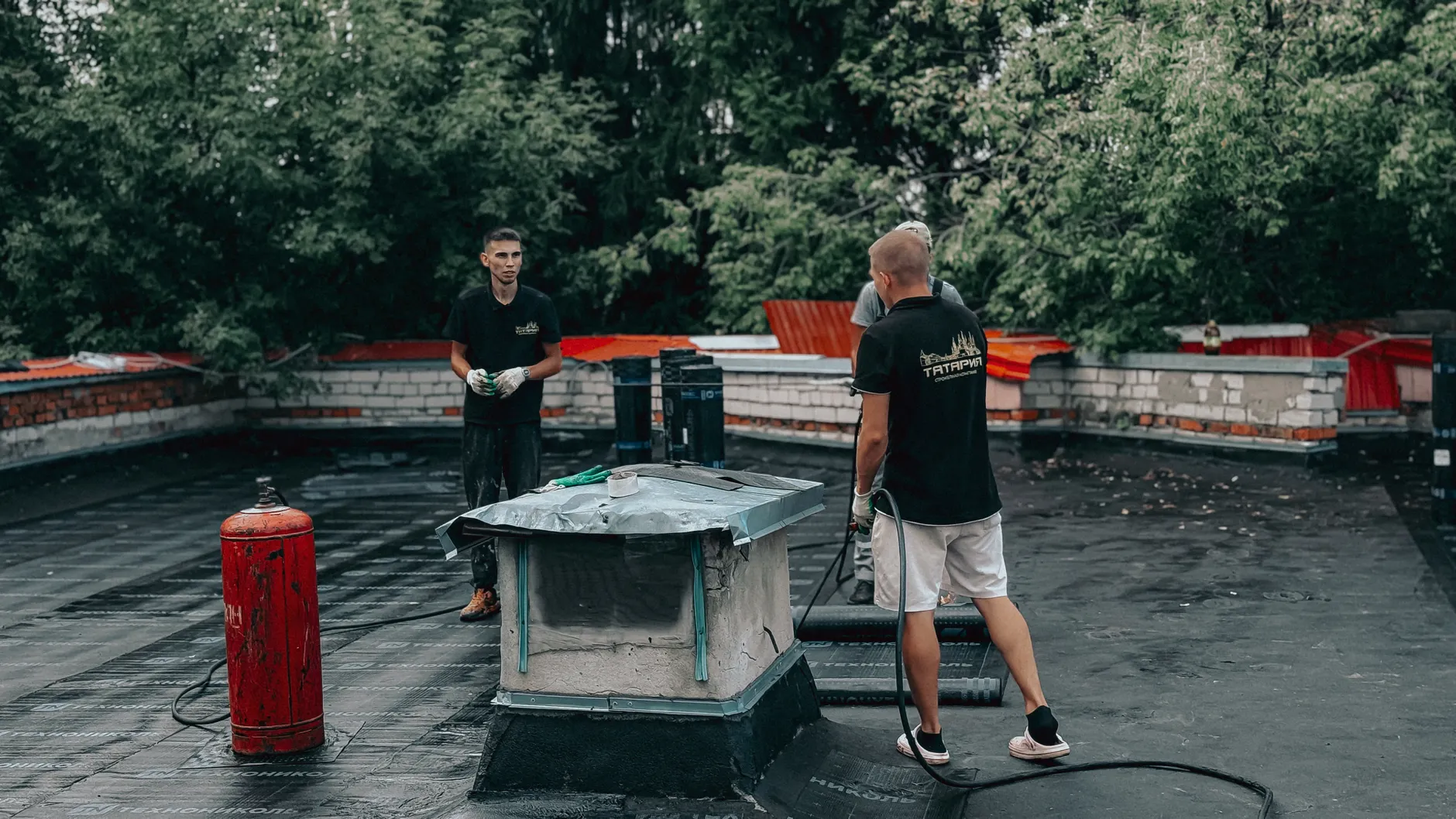
The flat roofs that give Newcastle households the most trouble are rarely the main roof — they are the smaller, hidden ones. Almost every Victorian and Edwardian terrace and Tyneside flat across Heaton, Sandyford, Jesmond and Byker has a rear outrigger — the back projection housing the original scullery or wash-house — capped with a flat roof, and later kitchen extensions, dormers, bay tops and garages add more. These low, out-of-sight coverings sit under the same North Sea wind and freeze-thaw cycling as the slate above, and because they are flat they hold water, catch leaves and take the full force of frost — usually the first part of a Newcastle roof to fail.
Newcastle Roofer Restoration Company has coordinated EPDM rubber roofing, GRP fibreglass roofing, felt (reinforced bitumen) roofing and warm and cold deck flat-roof work since we started in 2008 — eighteen years of stripping tired felt off rear outriggers and extensions and re-covering them to last. Every flat roof is scoped in a free survey and a fixed written quote, and the work is carried out to the standards that govern it: BS 6229 for flat roofs, BS 8217 and BS 8747 for reinforced bitumen (felt) membranes, and Building Regulations Part C for moisture and Part L for insulation on a full replacement.
The reason old flat roofs on Tyneside fail so predictably is that most were laid in traditional pour-and-roll felt decades ago, on a deck that was never designed to drain freely, so water ponds where the falls have flattened, frost gets under a blister or a lap, and the covering splits. Once water is through, it soaks the boarding and joists below, and on a rear-outrigger roof that often means damp in the room beneath long before anyone looks at the roof. A survey establishes whether the covering alone has gone or whether the deck and falls beneath it need putting right too.
A flat roof that is actively leaking, blistered and split, or ponding badly after rain is worth looking at before it soaks the structure underneath. Call 07460 067785 for a free survey, and we will tell you honestly whether a targeted repair will hold or whether a full re-cover in EPDM, GRP or felt is the sensible spend.
What We Do
Three Flat-Roof Systems, Matched to the Roof
EPDM rubber, GRP fibreglass and reinforced-bitumen felt each suit a different roof — the survey confirms the deck, the falls and the traffic before the system is chosen.
EPDM Rubber Roofing
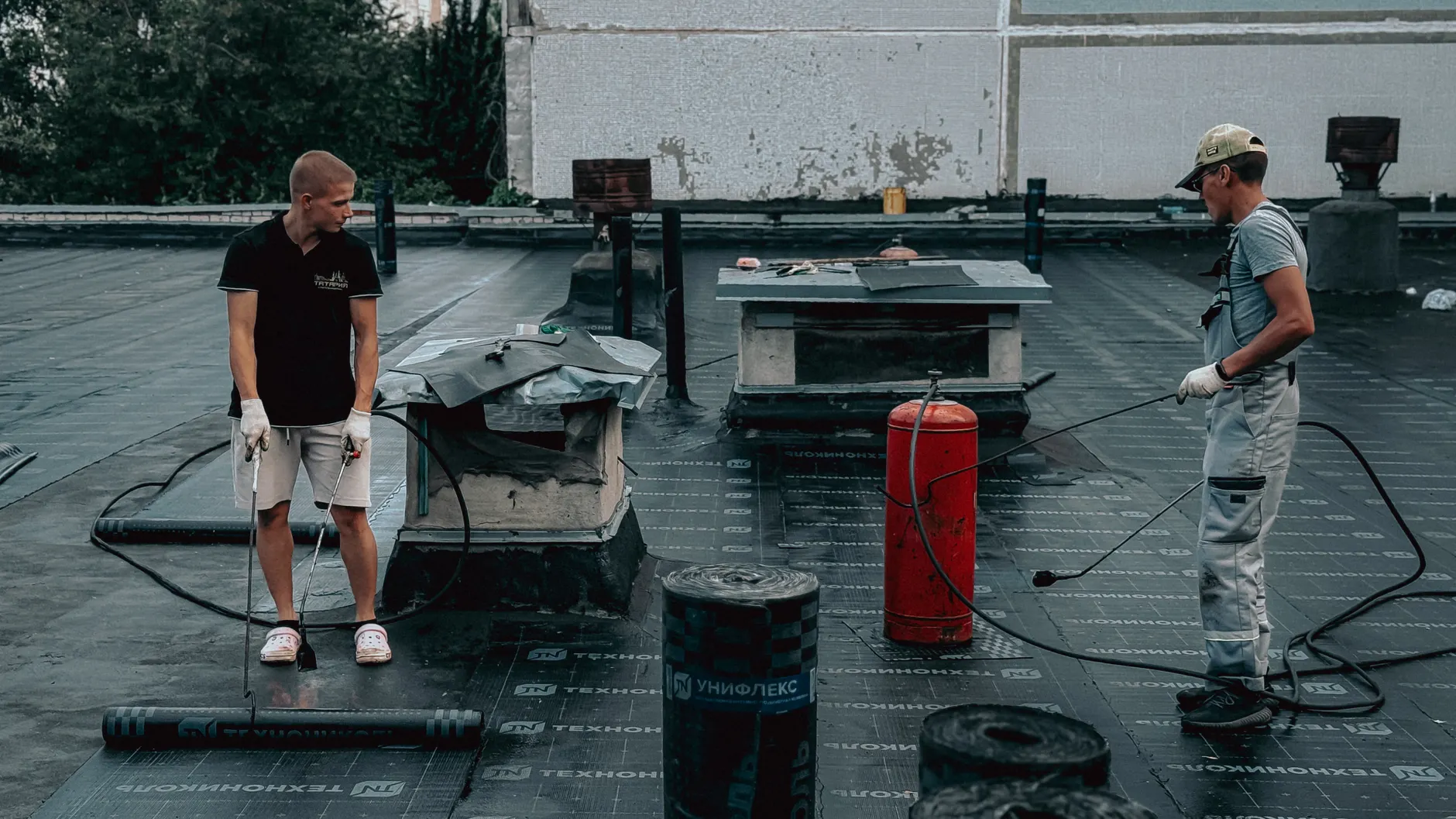
EPDM is a single-sheet synthetic rubber membrane, and on the smaller rear-outrigger and extension roofs common across Newcastle's terraces it can often be laid in one continuous piece with no seams across the field of the roof — which removes the lapped joints that are the usual failure point on old felt, and it flexes with the constant expansion and contraction that Tyneside's freeze-thaw cycling puts a flat roof through. Laid cold with no flame on the roof, it is a low-risk, long-life choice for exactly the kind of low, hidden flat roofs that dominate the city's back additions.
GRP Fibreglass Roofing
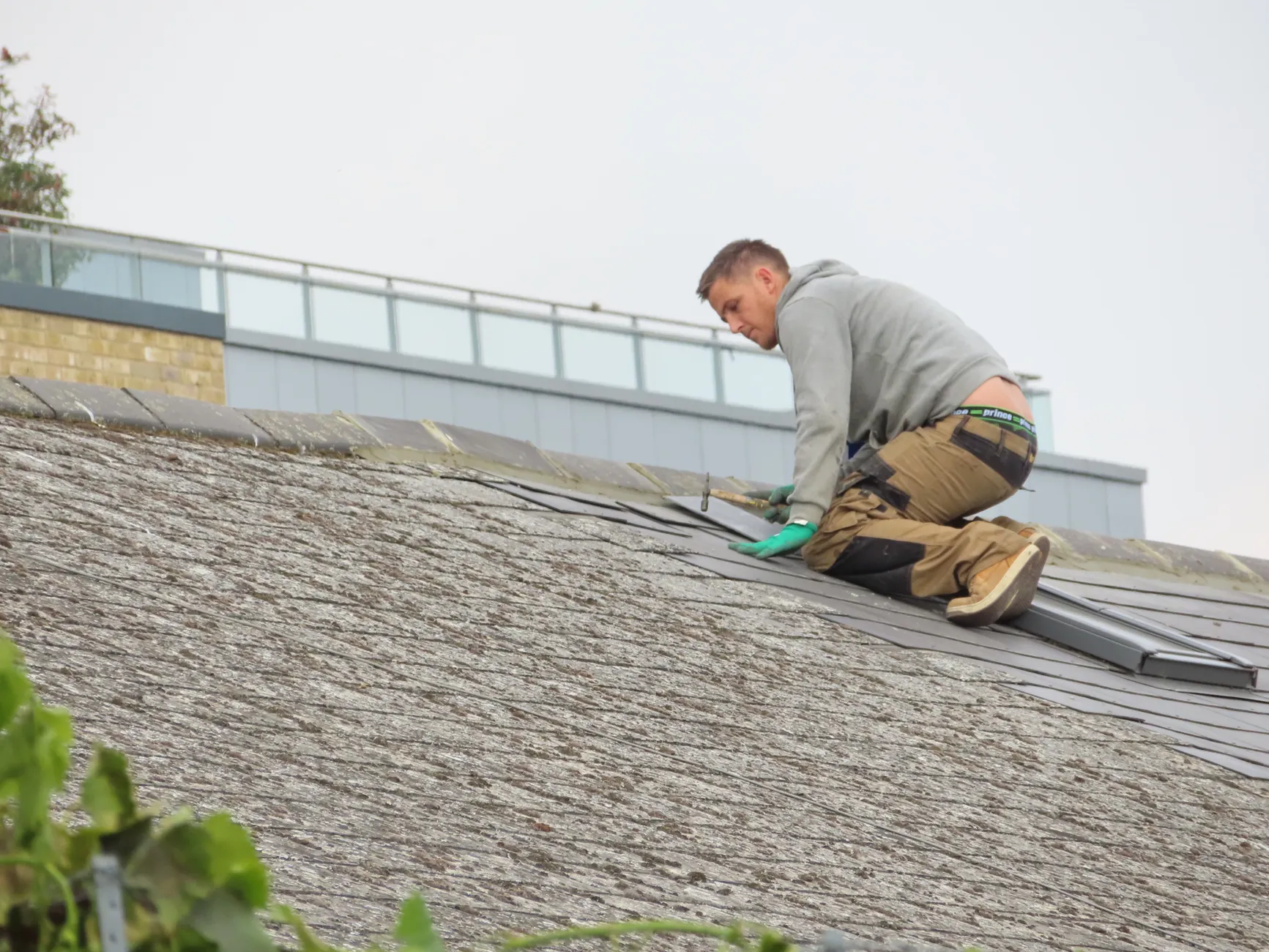
GRP — glass-reinforced polyester, the same material as a boat hull — is laid wet over a rigid board deck and cures into a single seamless, hard-wearing skin with no joints at all. Its rigidity and durable finish make it well suited to flat roofs that get walked on or overlooked from above, such as a dormer top, a bay roof or a small balcony on Newcastle's larger period houses and Gosforth villas. Being wet-laid, GRP needs a dry, stable deck and settled weather to cure — which the survey plans around on this coast — and gives a crisp, seamless finish that shrugs off foot traffic and freeze-thaw.
Felt (Reinforced Bitumen) Roofing
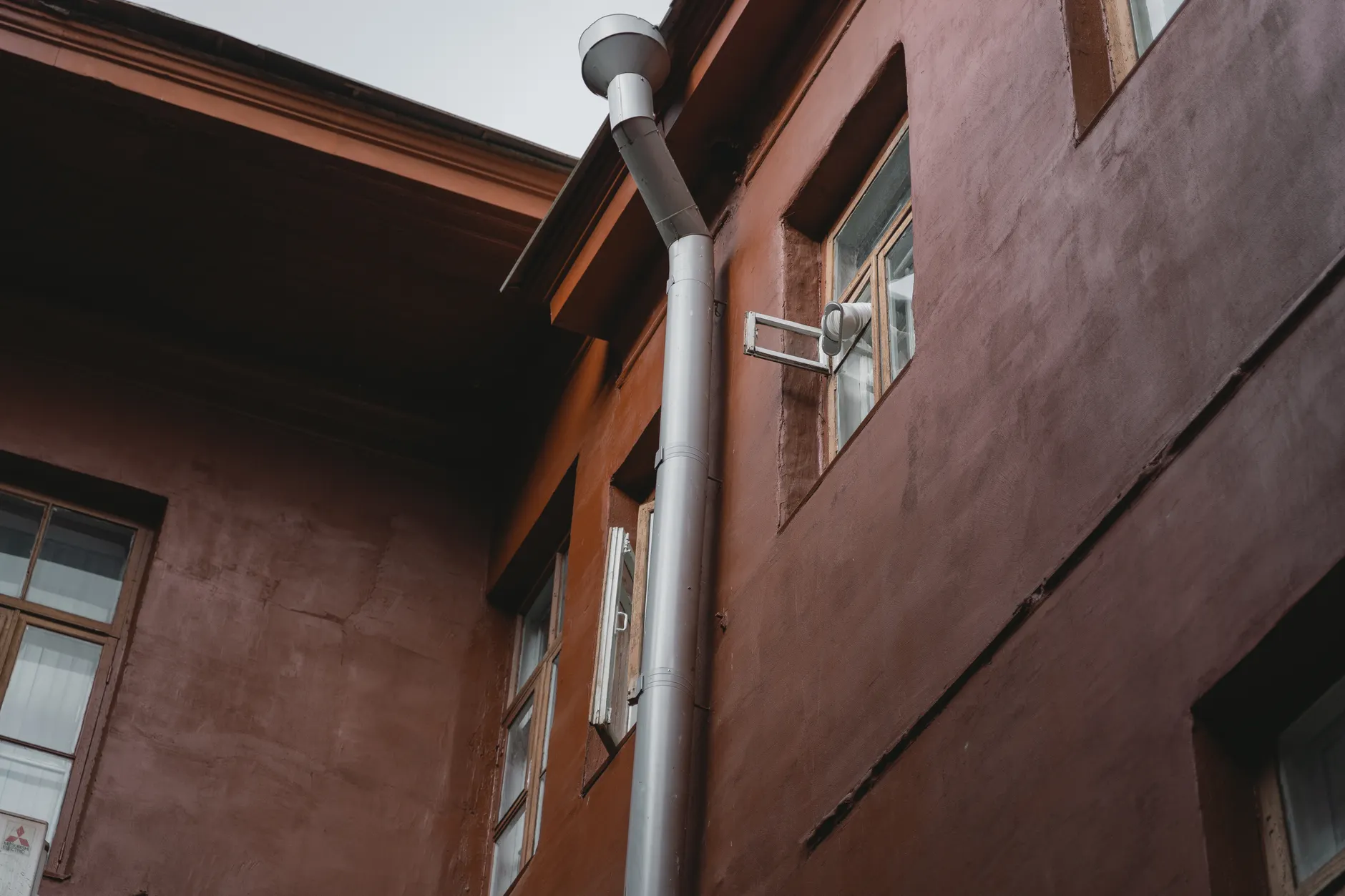
Modern reinforced-bitumen membrane — high-performance felt built up in layers to BS 8217 and specified to BS 8747 — is a world away from the thin single-layer felt that fails on so many older Newcastle outriggers. Built up correctly with a proper cap sheet, it is a robust, well-proven covering for larger flat areas. Where a felt roof has simply reached the end of its life on a sound deck, a like-for-like re-cover in a proper multi-layer system is often the most cost-effective route back to watertight.
The Benefits
Why the Deck Matters as Much as the Covering
A flat roof only lasts if the deck is sound and the falls actually drain — so a re-cover that ignores what is under the membrane is a re-cover that ponds and fails again.
Repair or Replace, Decided Honestly at Survey
A blister, a split lap or a bit of ponding does not always mean a full replacement — sometimes a targeted repair genuinely buys years, and we say so. But where the deck is soft, the falls have flattened and the covering is tired throughout, we are equally straight that patching a failing felt roof is money spent twice, and the free survey lays out both routes.
Falls and Ponding Put Right, Not Papered Over
Standing water is what kills a flat roof on Newcastle's frost cycle, so where the falls have flattened we correct them as part of a replacement rather than laying a fresh covering over the same puddle. Getting water moving off the roof to the outlet is the difference between a flat roof that lasts its full life and one that ponds, freezes and splits again within a few winters.
Warm or Cold Deck, Built to the Regs
A full flat-roof replacement is specified as a warm deck (insulation above the deck) or, where that is not practical, a correctly ventilated cold deck, to BS 6229 and with condensation control in mind so the new roof does not sweat from below. Where a replacement triggers Building Regulations Part L, the insulation upgrade is built in.
Why Us
Why Newcastle Calls Us for Flat Roofs
Eighteen years of stripping tired felt off the city's rear outriggers and back additions, since we started in 2008.
We Know the Rear-Outrigger Roof
The flat roof over a terrace's back projection is one of Newcastle's most common — and most commonly neglected — roofs, tucked out of sight above the old scullery until damp appears in the room below. We survey the whole covering, the deck beneath and the junction with the main slate roof and the neighbour's wall, which is where an outrigger roof most often lets go.
We Match the System to the Roof
EPDM, GRP and felt each have a roof they suit best — a small seamless outrigger, a walked-on dormer or bay, a larger built-up area — and we specify the system to the deck, the falls and the use rather than fitting the same covering to everything — the difference between a flat roof that lasts twenty-plus years and one that fails far too soon.
Coordinated Cover Across the Whole Area
From the back additions of Heaton and Byker out to Gosforth, Jesmond and Wallsend, the roofers we coordinate handle flat-roof repair and replacement across the full service area — see our full range of roofing services, and roof repairs where the trouble is on the pitched slate above rather than the flat section below.
A tired flat section over a back addition often sits right where the slate roof and the neighbour's wall meet — see roof repairs if the pitched slate above is also going, and chimney and leadwork where the junction lead has perished. For a whole tired roof, see roof replacement and re-roofing, and our full services for everything else. The same cover reaches Gosforth, Jesmond and Wallsend.
Frequently Asked Questions
Which is best for my flat roof — EPDM, GRP or felt?
It depends on the roof: EPDM rubber suits smaller seamless outrigger and extension roofs and is laid cold with no flame, GRP fibreglass gives a hard, seamless finish that copes with foot traffic on dormers and bay tops, and modern reinforced-bitumen felt suits larger built-up areas. The deck condition, the falls, whether the roof gets walked on, and access all feed into the choice. We assess those at the free survey and recommend the system that genuinely fits your roof.
My flat roof only has one blister — can you just repair it?
Often yes — a single blister, split lap or localised bit of damage on an otherwise-sound covering can be repaired and genuinely buy years, and where that is the honest picture we will tell you. The judgement is whether the rest of the covering and the deck beneath are still in good order, or whether the blister is one symptom of a roof tired throughout. We are straight at survey about which it is, because patching a failing felt roof repeatedly costs more in the end than a single proper re-cover.
Why does my flat roof hold water after it rains?
Standing water — ponding — usually means the falls that should drain the roof to its outlet have flattened over time, often because the deck has sagged or the roof was never laid with enough slope in the first place. On Newcastle's frost cycle ponding is particularly damaging, because trapped water freezes, expands and works under the covering until it splits. A proper replacement corrects the falls so water actually runs off, rather than laying a fresh covering over the same puddle.
How long does a new flat roof last?
As general trade guidance rather than a guaranteed figure, a well-laid EPDM or GRP flat roof commonly gives twenty to thirty years and a modern multi-layer felt system perhaps ten to twenty by grade, provided the deck is sound and the falls drain properly. The old single-layer felt that fails on so many Newcastle outriggers was never in that league, which is why replacing it with a proper system is such a step up. Lifespan depends heavily on the deck, the falls and the detailing, which is why the survey looks below the covering, not just at it.
What is the difference between a warm deck and a cold deck flat roof?
A warm deck places the insulation above the structural deck with a vapour control layer beneath it, keeping the deck warm and avoiding the interstitial condensation that can rot a roof from the inside, and it is the recommended approach on a full replacement. A cold deck puts the insulation between the joists below the deck and must be correctly ventilated to BS 6229 and BS 5250 to avoid condensation. We specify whichever suits your roof and access, with condensation control designed in.
Will a new flat roof need building regulations or an insulation upgrade?
A like-for-like repair generally does not, but a full replacement of the covering can trigger Building Regulations Part L, which sets the insulation standard for the renewed roof. Where that applies, we build the thermal upgrade into the specification so the finished roof meets the current requirement rather than simply repeating the old, poorly insulated build-up. We flag whether the regs apply to your job at survey, so there are no surprises.
Can you lay EPDM without a naked flame on a timber terrace roof?
Yes — EPDM is laid cold with adhesive and needs no torch on the roof, which makes it a low-risk choice over a boarded terrace outrigger where a flame would be a genuine fire concern against dry timber and the adjoining property's walls. That cold-applied method is one of the reasons EPDM suits the tight, timber-decked back additions so common across Newcastle's terraces. The survey confirms the deck is suitable before any work is booked.
There's damp in the room under my flat roof — is the roof the cause?
Very often yes, because a rear-outrigger or extension flat roof sits directly over a habitable room, so once the covering fails the water soaks the deck and shows up as damp on the ceiling below, sometimes long before anyone thinks to look at the roof. It can also be condensation from a poorly ventilated cold deck rather than a leak, which is a different fix. The survey establishes which it is — a failed covering, a soaked deck, or interstitial condensation — so the work addresses the real cause.
Do you re-board the deck or just re-cover the top?
It depends what the survey finds: where the existing deck is sound and dry, a new covering can go straight over it, but where the boarding has gone soft from a long-standing leak it is replaced as part of the job, because a new membrane over a rotten deck is a false economy. We check the deck's condition and the falls beneath the old covering before quoting, so the fixed written quote reflects what the roof actually needs. Re-covering a failing deck to keep the price down would only mean the roof failing again far too soon.
How long does a flat roof replacement take?
A typical garage, extension or outrigger flat roof is usually a one-to-three-day job depending on the system and the deck work involved, with GRP needing a little longer because it is wet-laid and cures between coats. Weather is a real factor on this coast — a wet-laid GRP roof in particular needs a dry, settled run to cure properly — so we plan the timing around the forecast. The survey gives you a realistic duration for your specific roof rather than a one-size-fits-all figure.
Should I replace a felt roof with felt again, or switch to EPDM or GRP?
If a felt roof has simply reached the end of its life on a sound deck, a like-for-like re-cover in a proper modern multi-layer reinforced-bitumen system is often the most cost-effective route back to watertight. But if the roof is small and seamless, or gets walked on, EPDM or GRP may give a longer, joint-free life for a comparable spend, so it is worth weighing at survey. We set out the options with honest costs against each, so the choice reflects your roof and budget.